
Did You Miss the Personal Branding Workshop? Here's What to Do Next.
On March 18, Shauna Thayer of Bloom Creative led Cambridge business owners through a practical process for building a brand foundation. If you weren't there, you can still put her framework to work. Here's how:
Start with your origin story. Before you think about logos or taglines, ask yourself the basics: Why did you start your business? What were you tired of seeing? What did you want to do differently? What experience do you want customers to walk away with? Your answers to these questions are the raw material for authentic brand messaging — and they're often more compelling than anything a marketing agency could write for you.
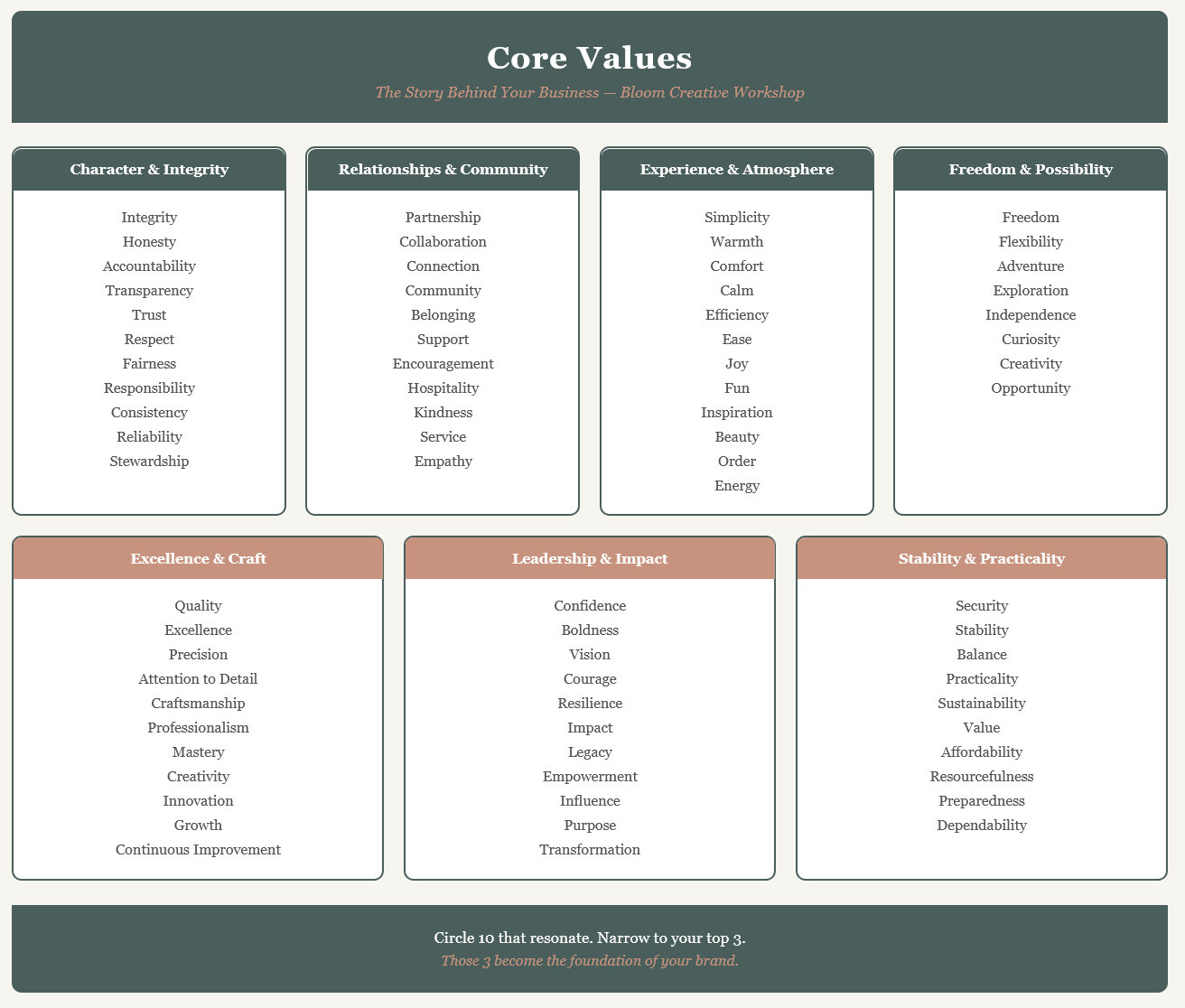
Get clear on your values. Shauna walked participants through identifying their top ten values from categories like Character & Integrity, Relationships & Community, Excellence & Craft, and Leadership & Impact — then narrowing to three. Your final three become the filter for business decisions, customer interactions, and how you talk about what you do. Not sure where to start? See the full values list below.
Turn your values into a brand statement. With your top three values in hand, answer these prompts: What does my business exist to do? What do I care deeply about? What experience do I want customers to have? Write two to five sentences using your answers. That's your brand statement — and it works as your social bio, your website About section, and your networking introduction.
Use your values to make better business decisions. This is where the real work happens. Once you know your values, they become a practical tool, not just a marketing exercise. For example: If community is a core value, you might choose to source products locally, design your space to encourage conversation, or partner with other businesses rather than compete. If reliability is a core value, you don't close early, let inventory run out, or vary your hours without notice. If integrity is a core value, you make it right when something goes wrong, even when it costs you. Your values clarify not just what you do, but what you won't do. That consistency is what builds customer trust over time.
Put it to use. Shauna created a free guide — Using Your Brand Statement in Your Marketing — to help you take your draft statement and apply it across your marketing. You can request a copy at the link below.
